Showing posts with label A.S. Byatt. Show all posts

Monday, July 25, 2022

Climate change - reality will 'win' over scepticism propaganda

Last week's heatwave set new records for temperatures in the UK. It was an uncomfortable and oppressive couple of days. The transport system was badly affected and we even saw wildfires on the edge of London in Essex. This all led to some serious discussions about the changing climate and the way weather systems are altering.

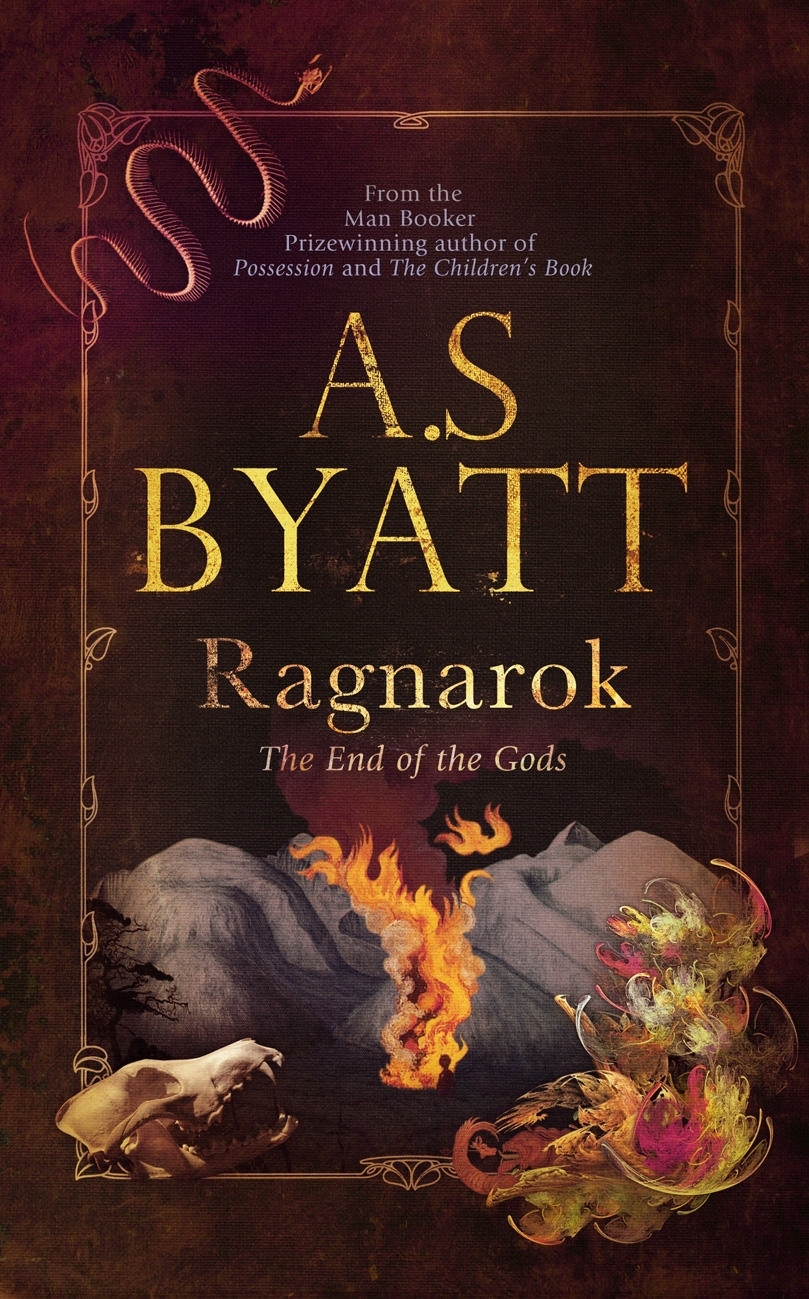
The sudden newsworthiness of climate change as the mounting evidence becomes harder to ignore reminds me of the central message of AS Byatt's book called Ragnarok (which I blogged about ten years ago!) 


In the book's preface, Byatt explicitly links her retelling of the myths to climate change and compares the failure to act to prevent disaster as akin to the gods mucking about and wasting time even though they all knew their prophesied doom was drawing near. The gods' attempts to ignore reality just made their destruction more inevitable. 

As I said earlier this year, reality tends to win against rhetoric. The planet is going to get hotter no matter how many lies are told by right wing politicians who are guided by their donors or grifters masquerading as 'sceptics'. Climate change is happening now whether people believe in it or not. In the same way that coronaviruses don't respect anyone's firmly held opinions about whether or not they are dangerous, the damage done to the climate isn't prevented by how many people decide they don't believe in it. 

Ultimately there will come a point when the people who have been spreading the climate scepticism propaganda will be shown to have known that it was true all along, in exactly the same way that Big Tobacco knew that cigarette smoking caused cancer while still denying any links. 

The climate sceptics may even get away with it if there is no longer a functioning human society. Who will call them to account after the apocalypse? 

There was nobody left to ask the gods why they didn't do more to stop Ragnarok. 

Thursday, August 26, 2021

Mining the myths - modern takes on the Norse pantheon


I've recently finished reading The Gospel of Loki by Joanne Harris, which is one of several books I've read over the past decade that have expanded on Norse mythology. It was a bit strange reading the book concurrently with watching the Marvel series called Loki on Disney Plus. It's a credit to Tom Hiddleston, the eponymous antihero, that I picture him when I'm reading a completely different book about Loki, the Norse god not the Marvel character. 

The other books I've read are Ragnarok by A.S.Byatt, which I blogged about back in 2012, and Norse Mythology by Neil Gaiman, which I thought I had blogged about previously, but obviously I didn't get around to it. I'll also chuck in American Gods by Neil Gaiman, which takes members of the Norse pantheon and relocates them to the USA where they struggle to get by on the new continent because of a lack of believers. (I can't locate my copy, which is why it isn't in the picture.)

And then there is the Marvel Cinematic Universe (MCU), which includes the three Thor movies and the six-part Loki series, plus Thor and Loki have key roles in the various Avengers movies. Loki is central to Avengers Assemble as Thanos's agent to steal one of the Infinity Stones while Thor's character development, as he struggles to adjust to life after Asgard and failing to defeat Thanos, is one of the most memorable elements in Avengers Endgame, which capped off the first multi-movie arc of the MCU.

So, a brief synopsis of the source material

Marvel

Thor, Odin, Loki and the other characters from the Norse myths are actually superpowered beings with various magical powers and abilities from a different world or plane of existence (I'm not exactly sure which it is meant to be). In this universe Thor and Loki are brothers, the sons of Odin, except Loki is actually adopted. Although the Thor films are meant to be about Thor, he's a bit of a dull character initially and Loki steals the show. Which is fitting as he is the trickster god. Loki's story continued this year with the release of a six part TV series on Disney Plus, which introduced a range of 'variant' versions of Loki from different timelines, leading into a multiverse scenario that will be the centrepiece of the next phase of the Marvel Cinematic Universe.

Myth-mining - borrows names, character traits and some of the mythic storylines, such as the end of the gods at Ragnarok for one of the films, and recasts them within a science fiction comic book universe. If there was anyone who took the mythos seriously, Marvel would be getting complaints about cultural appropriation.

The Gospel of Loki

This retells the various Norse myths from the perspective of Loki who is, as expected, an unreliable, dishonest narrator who blatantly positions himself as the wronged victim. The various gods are portrayed as clueless and vain, obsessed with power and prestige and unwilling to share their wealth with anyone else. There is some depth to the world that Joanne Harris creates, with runes carrying magic and therefore being the tools by which the gods can create and some other contemporary touches to how the characters interact. 

Myth-mining - this stays relatively true to the source material, injecting humour into the stories as Loki tries to explain his mischief was actually quite funny, if only the other gods were intelligent enough to get the jokes. 

Neil Gaiman's books

Norse Mythology is a fairly straight retelling of the Norse myths in contemporary English. It does exactly what it says on the cover. I found it a dull read, which surprised me because Gaiman's work is usually anything but dull. American Gods meanwhile, has versions of the Norse gods seeking to establish themselves in America, against the tidal wave of new gods being created in American culture. Within this framework, Odin is a wily conman, Loki is a similarly shifty lowlife, Thor has committed suicide and Baldur has forgotten who he is. Other gods from other old world mythologies are also surviving in the shadows of the new American cities, imported to the new world with their believers who emigrated there (or were taken against their will). The Norse gods are the old world gods who have been there the longest, arriving with the Viking adventurers that discovered Vinland and then clinging on in a liminal existence ever since. The book concludes with an epic battle between the old world gods and the American gods.

Myth-mining - As a straight retelling, Norse Mythology is as close to pure Norse myth as could be imagined. American Gods, however, develops the characters in unusual ways but with a solid basis in the original myths - Norse, African, Egyptian, Eastern European and others. 

Ragnarok

The premise of this book is someone writing about how they discovered the Norse myths and how those myths got them through tough times as a child, when they thought the world was ending. It was a very clever vehicle for retelling the myths and exploring their psychological impact and appeal. There is also an essay in the book that tries to draw some life lessons from the stories and make them relevant to current issues, particularly drawing a parallel between the impending doom of Ragnarok, that the gods knew was imminent yet were powerless to prevent, and the damage being caused to the world's climate that similarly seems to have powerful people acting obliviously and ignoring the predictions of catastrophe. That really stuck with me as an illustration. 

Myth-mining - The stories are retold faithfully, while intertwined with original material, which helps make them more real and important. 

The conclusion

I don't think it's coincidental that these writers and creatives are drawn to using these myths in their own work. The stories of the Norse gods are stories about how wielding power contains within it self-destruction, how trying too hard to preserve something hastens its loss, and how actions that seemed like a good idea at the time often have unintended consequences. The gods respond to the threat of Fenrir, the wolf destined to swallow the moon, and seek to neutralise the threat, which only drives Fenrir further down a path of madness and destruction. Odin hoards knowledge, worried what will happen if it gets into the wrong hands, only to find that the other gods embark on courses of action that are damaging anyway. 

These are all powerful, seminal themes. Love, hate, pride, ignorance, valour, courage, selfishness, heroism, nihilism, betrayal, honesty, and many more very human traits. The "gods" in this fiction are just humans writ large, which is why we can learn from them. That's probably why these story-tellers feel it is worth retelling these tales. 
Wednesday, January 09, 2013

My five star books

Since 2002 I have been noting the books I read and giving them a review of between one and five stars. A bit sad, I know, but it’s helpful when I can’t remember whether a book was any good or not.

Anyway, here’s a list of the books I’ve given five stars to. I was a bit surprised at some of the ones on this list. Obviously I really liked them at the time. I’m not sure I’d rate them all so highly if I read them now. That shows how subjective this is. I’m also interested by what is not on there – no J.D. Salinger, for example.

God’s Debris – Scott Adams
Stupid White Men – Michael Moore
The Silmarillion – J.R.R. Tolkien
The River of Time – David Brin
The Incarnation – St Athanasius
Sabriel – Garth Nix
Becoming Fully Human – Patrick Whitworth
Lirael – Garth Nix
How to Read the Bible for all it’s Worth – Gordon Fee
Paul, the Spirit and the People of God – Gordon Fee
Abhorsen – Garth Nix
A New Kind of Christian – Brian D. McLaren
A Theology of the Dark Side – Nigel G. Wright
Possession – A.S. Byatt
Velvet Elvis – Rob Bell
Use of Weapons – Iain M. Banks
Nineteen Eighty-four – George Orwell
Lolita – Vladimir Nabokov
The Secret History – Donna Tartt
The Eyre Affair – Jasper Fforde
The Road to Wigan Pier – George Orwell
To Kill a Mockingbird – Harper Lee
Surface Detail – Iain M. Banks
Wonder – R.J. Palacio
The Plot Against America – Philip Roth
Ragnarok – A.S. Byatt
Generation X – Douglas Coupland
Wise Children – Angela Carter

I’ve noticed that as time has progressed I’ve stopped rating Christian books so highly. I’ve also started reading more well-known authors, which is probably the influence of my book group. But I’ve awarded fewer five star ratings as time has gone on, so I’ve given F. Scott Fitzgerald, Salinger, Solzhenitsyn and others four or four and a half star ratings, where a few years earlier they would probably have got a five. (This also explains why Stupid White Men is in this list. I don’t think I’d give that a five now.)

Friday, September 14, 2012

Two books about 'myths'

One of the things I love about my book group is that I get to read stuff I would never have otherwise bothered to pick up. First, I should explain, my book group isn't like many other book groups. We don't have a set text that we all have to read and then discuss. Instead you read what you want to read, bring it along and tell the group about it.

It works well because you aren't stuck with some awful book (like 'Walk Among the Birds' in the movie Date Night), and you can borrow each other's books, expanding your library through the libraries of however many other people are in the group.

I borrowed two books off Elaine that are part of the Canongate 'Great Myths' series: Ragnarok by A.S. Byatt and The Good Man Jesus and the Scoundrel Christ by Philip Pullman.

I loved Ragnarok, but then I have always loved the Norse myths. Byatt is a clever storyteller, interweaving some vivid childhood fears and the sense of dread and doom that I know I often felt as a child into a story that also captures the essence of the Norse myths and makes them accessible.

It is an excellent piece of writing, and she drew an interesting exegetical point from it - that the gods knew Ragnarok was coming, but they didn't have the imagination to avoid it. The parallel between our current culture's collision course with catastrophic climate change is thought-provoking.

Pullman meanwhile has tried to demythologise and then remythologise the story of Jesus. I've dissected this a bit on freelance theology already, but my main criticisms were over his unbalanced handling of supernaturalism. Plus, as I say on freelance theology, stealing a joke from Monty Python is naughty for an author like him.

I have no real issues with Philip Pullman saying what he wants to about God, Jesus, the historical basis for Christianity or the Church. I might disagree with him, but some of his points are interesting. But this book just isn't as good as the author seems to think it is when he writes about it in his essay afterwards. I can forgive him for being rude about religion. But I don't really like how smug he seems about his own work.

Still, perhaps worth a read. But read Ragnarok first.

Wednesday, September 08, 2010

Book Review: A.S.Byatt - The Children's Book

I don't often review books on here, as I save that for my book group, but A. S. Byatt wrote one of the better novels I've ever read, Possession, so I was looking forward to this.

After I read Possession I felt depressed that I would never write as well. But this book has restored my hope. If this is the kind of book that top novelists can get away with, then there's scope for people like me.

Firstly, this book would be better without the frustrating tendency to lecture. I am sure that A. S. Byatt read widely in her research for the book. The problem is she wants to tell me, the reader, how much she knows.

There is an improbable number of chance meetings with famous people from the time - like Oscar Wilde, Auguste Rodin, and Marie Stopes. Even given the circles the protagonists move in, it gets a bit silly (especially the encounter with Stopes). She gets obsessed with the "young and beautiful" Rupert Brooke towards the end of the book, dropping him into the prose in a gossipy kind of way.

At times the story drifts into quasi-historical narratives about suffragettes or letters written by the Prime Minister's wife. Interesting, yes, but they get in the way of the story.

As a result some of the characters, especially the younger children, hardly get a look in to the story until the end, when they are suddenly introduced to the reader before being shipped off into the carnage of the Great War.

There are a couple of plot 'twists', but they are telegraphed well in advance with hints dropped like housebricks. I worked out there were parentage issues a long time before the characters did. I knew there was something dark locked away in the Potter's cupboard and guessed what it might be. And I knew who the soldier in the clay was bound to be.

I'm not saying that to big myself up. My point is, if I get it, then it's not much of a twist.

But there is an over-arching sadness to the book. A generation of free-thinkers and Fabians, socialists, artists and poets fail to change the world. Their children are raised with dreams of utopia and end up ground through the gore-mills of Flanders and the Somme. The tragic ends of life and the shattered families who are left behind are described so matter-of-factly they expend the reader's emotional energy far more than if written as melodrama.

So, on that score, it's a good book. Parts of the plot will probably live with me for a long time (much like Possession). Many vignettes ring true to life and are powerful because of it.

And yet I was left feeling that this had the potential to be so much better if the author could have restrained herself from showing off her learning.