Showing posts with label fair trade. Show all posts

Sunday, March 13, 2022

February 2022 - end of month review

This is a bit late as we are already into mid-March, but we had a week away last week so I am playing catch up now. Being almost 2 weeks into March means that I feel like I've forgotten what happened in the shortest month. 

Another reason why the monthly review is hard to write is because events in the wider world took a rather grim turn as Russia invaded Ukraine, prompting the first war in Europe since the early 1990s when Yugoslavia fell apart. I have several thoughts about why this war feels different even to the post 9/11 invasion of Iraq, the long war in Afghanistan or the Syrian civil war. 

There has been a democratisation of war reporting now, with anyone on the ground with a mobile phone supplying footage and commentary. Twitter is full of shaky handheld footage from people in or near the combat zone. This is probably the first war to be livestreamed. It's all very sad and stupid and depressing. 

However it has lifted the lid again on the utter corruption of the UK Government and how easy it has been for Vladimir Putin to purchase the souls of Conservative politicians. It's the ultimate Thatcherite mindset - to put a monetary value on everything. Although Margaret Thatcher would have been horrified to see the way her successors have shilled themselves and her party to malign despots. 

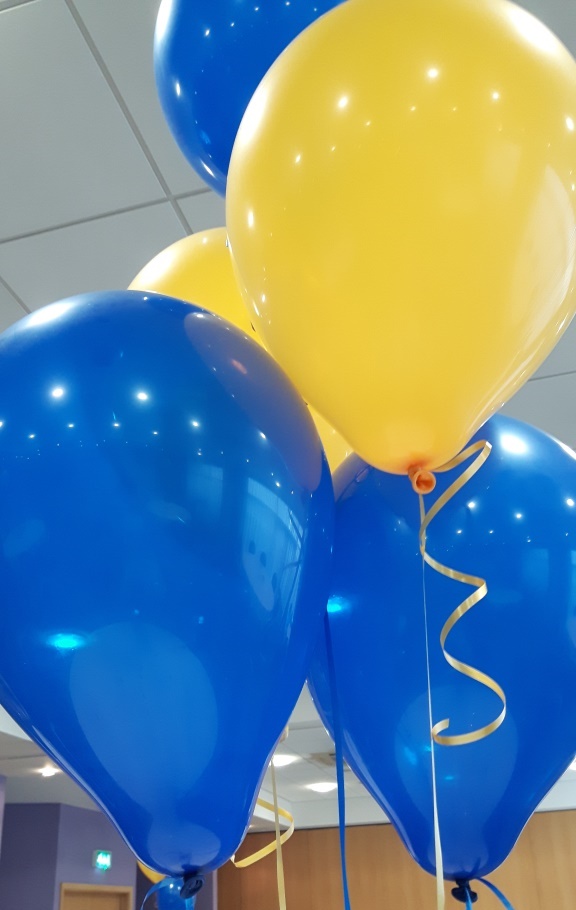
There was a show of solidarity across football crowds with the people of Ukraine. Barry Town fans have long used blue and yellow Ukraine flags as decoration, so it was suddenly sadly relevant to see them being held up by fans at the game against Caernarfon Town at the last game in February.


There were a couple of other notable things about the game. Firstly, the Caernarfon manager had decided to copy the hipster's choice of football manager, Marcelo Bielsa. by sitting on a tub at the edge of his technical area. He got a chant of "Discount Bielsa, you're just a discount Bielsa" aimed at him.


The other was Barry's supporter's rep on the board, Ian, turning up in a suitable costume to celebrate Fairtrade Fortnight.


The free bananas that he was handing out were especially welcome as it was a 12.45 kick off and I hadn't had my lunch yet. (I bought chips from the chip van.)

That game was the final one of six matches I attended in February. Barry had two Friday night games so on the free Saturdays I went to Pontardawe Town near Swansea and to Cambrian & Clydach in Clydach Vale near Tonypandy in the Rhondda. They hadn't updated their match board, but the game was on. 


In the middle of the month, Cathy and I celebrated Valentine's Day by watching the film Singin' in the Rain. I thought I had watched it as a kid, but remembered nothing about it at all apart from the iconic bit where Gene Kelly is dancing along singing in the rain, which I reckon I must have seen as a standalone clip. The film has aged quite well, I felt, with the theme of celebrities faking relationships to keep the gossip industry happy being weirdly up-to-date. 

Then towards the end of the month we had a sudden announcement that something we were planning to attend in Cambridge wasn't happening, so we suddenly had no reason to go and stay over there at the beginning of March. In typical fashion, we had just booked accomodation in Cambridgeshire the day before we were told that we didn't have to go. 

Fortunately, we were able to swap our accomodation for a week in Calstock next to the Tamar River on the border of Devon and Cornwall. I will tell you more about that in my next blog post!

Saturday, December 25, 2021

Christmas inflation crisis

I wasn't going to blog on Christmas Day, but this bag of chocolate currency that I received this morning is an illustration of how inflation is affecting everything in the economy!


There's a £20 note in there!!

(The chocolates are from Lidl and they're fair trade. They taste very sweet, more like how drinking chocolate tastes. The notes and coins taste the same!)

Happy Christmas!

Sunday, January 24, 2016

Celebrating my Mum’s 70th birthday

I was asked to give a speech at my Mum’s 70th birthday party. Here it is. There were a couple of ad libs as well, but I can’t remember them. The asides (in brackets) were scripted.

Honestly, Mum loved it!

This birthday is a bit different to last year – Mum had planned a quiet celebration but then I had some unexpected difficult news and so Mum and Dad came suddenly to Cardiff to see us. Sorry for causing you such an unusual birthday last year, Mum. I hope this year’s makes up for it.

As we prepared for today, my wife Cathy trawled through photo albums and CDs of photos to create a photo exhibit. There are some very funny photos in there. But along with the best-forgotten fashions, and one or two outfits that still look really good, the one constant in so many of the photos are family, friends, people and celebration. We had photos from many previous birthdays and it’s obvious that as a family we mark milestones.

Cathy's hard work

There’s also a photo in there of Mum teaching me when we lived in the Gambia. Mum taught me to read and it wasn’t long before I was reading anything I could get my hands on – including medical journals someone gave me as a joke. [Mum reminded me afterwards that the only word I got stuck on was hypernatremia. For reference, I was 5.]

That shared love of reading and of books has always been something that has brought Mum and me together. When we were very little we had a very wet holiday in the Lake District (I don’t think there’s any other kind!) and we spent a lot of time in the car driving to various places where the rain didn’t matter. Along the way Mum read us chapter after chapter of The Lord of the Rings – and I’m sure my fondness for that book relates to hearing it in Mum’s voice first.

[Actually, Mum told me afterwards that she thinks that was a holiday we had travelling round the South of England, but hey, it’s still true that she read all 1,061 pages to us. And who’s making the speech here, anyway?]

As a teenager I started reading Terry Pratchett’s Discworld series and it wasn’t long before Mum was also fully conversant with the misadventures of Rincewind the wizard and the streetwise cynicism of Captain Sam Vimes. So whether it was the mines of Moria or the streets of Ankh-Morpork, we always had those shared worlds to discuss.

It’s funny the things you learn from your Mum, and what you take with you into adult life. This year I will have been involved in Fair Do’s, the fair trade shop in Cardiff, for 20 years. But I was involved in Shrewsbury Fair Trade first, thanks to Mum.

In fact, I’ve often said the fair trade movement in Britain was built on the back of coerced teenage labour. I lugged a lot of boxes on her behalf – the trade-off was after I dropped her off I could keep the car for a couple of hours. Mum’s car was a Vauxhall Cavalier (the classic 80’s design with the boxy front end). It became my first car in the end until it sadly died of rust and over-use. But ask Mum and she will tell you it was a good car and we both loved it.

So we have memories and milestones, but even on the cusp of 70 my Mum is full of surprises. Just after Christmas we went as a family to see the new Star Wars film. Afterwards, as we left the cinema, Mum said: “Oh that was so much better than those prequel films. The fight scenes were so much more realistic!” (If you think that’s surprising, you should hear her talk about how much she likes Die Hard!)

So, from Middle Earth to a galaxy far, far away, thank you Mum for being there with us. That’s something worth celebrating.

Happy Birthday, Mum!

Thursday, December 24, 2009

10 'Best Bits' of 2009

These aren't the only good bits, but they are ten things that made me feel good this year.

1) Getting prayed for by a Bishop before he interviewed me for a job at Lambeth Palace. (I didn't get the job but it was a great experience.)

2) Buying my first new phone in a decade. I need never be out of reach of Facebook ever again!

3) Being rated the number one presentation at our work's Staff Conference, beating all the 'star names'.

4) Being interviewed in the studio by Premier Radio. I've also done several interviews for UCB and will now be doing a monthly slot!

5) Finally getting copies of the book I wrote a chapter for in the post. (I'd written it back in 2007!)

6) Seeing The Tragically Hip in Manchester and Glasgow. And getting to sing into the mic in Glasgow - I still haven't really come down after that.

7) Getting the weather we wanted at Soul Survivor, for once.

8) Two early morning dips in the sea on our youth weekend on the Gower. The water was freezing and yet surprisingly I loved it.

9) Playing on Cathy's Nintendo Wii - getting a gold medal on Tank is one of my ambitions for 2010.

10) Cadbury's going fair trade on a growing number of their chocolates. (Okay, there's rumours they may be bought out by Kraft or the scumbags of evil Nestle, but even so one of the big boys has finally, finally, got the Fair Trade label on their chocolate and apparently others are going to follow suit.)

Thursday, March 05, 2009

Some better, and unexpected, news

So, on a day where I had some of my saddest news ever, I also heard that Cadbury's are moving their Dairy Milk brand into fair trade certification by the end of the summer, instantly trebling the amount of cocoa traded fairly from Ghana in any given year.

Compared to my other news that was completely unexpected. In the past Cadbury's have been very defensive about their trading policy. In fact, I think we still have the letter they wrote to us saying they weren't considering it as an option.

There's power in persuasion, people.

Monday, March 02, 2009

And reason number 10 why Peter Griffiths was wrong…

My good lady wife reminded me of another assertion by Peter Griffiths at The Great Fair Trade Debate which either completely missed the point or was a deliberate misrepresentation (your call).

10) Peter Griffiths claimed that fair trade is about paying higher prices so that some of the money goes to the producer. Again, not quite right. Some fairly traded products are more expensive than unfairly traded equivalents. But then many companies who trade, even in this country, tend to drive the hardest bargain they can. Promising one price, then offering a lower price at harvest time is one classic trick.

But what about those fairly traded products that are cheaper than their equivalents? They do exist. What’s going on there, in Peter Griffiths’ view of the fair trade world?

If fairly traded products do cost more, there are often a number of different reasons for that. Trying to trade across geopolitical trade tariffs and barriers are reasons for higher prices. Simple economies of scale play a part too. Nestle dominate the world coffee market and can drive down their prices if they want to (guess whether they do or not), but they also have their own packaging plants and can fill chartered planes with coffee. They don’t have to pay a third party to have their coffee packaged and transported, so it’s cheaper for them to get the coffee to market.

Plus, ‘fair trade’ is more than just ‘we pay more money’. Yes, sometimes there is a ‘fair-trade premium’. But at its heart, ‘fair trade’ is about sustainable relationships – where the buyers pay the agreed-on negotiated price and don’t try to wiggle out of it later, where long-term trading relationships matter, and where producers are often paid some of the money upfront so they don’t have to go into debt while the crops are growing or the products are being made.

Thinking that ‘fair trade’ is all about money, and not realising that actually it is a life-affirming dynamic, is the kind of error made by the kind of person who doesn’t understand that human beings trade with other human beings – and trade is just one of many human relationships. Or, to put it another way, the kind of person who extrapolates behaviour based on the premise that everyone behaves like automatons, then wonders why there complex models don’t work in the real world. Or, to put it a third way, a person who is a classically trained economist.

And just to set the record straight, because my good lady wife told me I’d got one of my facts wrong, the chap from the Windward Islands wasn’t actually from a co-operative. He was a member of the Windward Islands Farmers Association (WINFA), which works on behalf of the farmers e.g. to get the Fair Trade Mark on their bananas.

But even if he wasn’t from a co-operative, he still (rightly) took offence at Peter Griffiths’ assertion that someone in the developing world would automatically steal if they had the opportunity. But then that statement was based on an anecdote, and according to Peter Griffiths, anecdotes don’t count as evidence…

And finally…
I stood up and said something at the debate, challenging Peter Griffiths on a couple of these things. Obviously when I sat down I thought of several more things I could have said. That always happens.

Anyway, Cath has told me that she met people at a fair trade fair at the weekend who commented that what I said was helpful. When she went into the shop at the weekend, one of her co-workers said that she’d heard I’d stood up and made a good point. Fame.

But my encouragement to you is speak up and speak out in those situations where you just know you have to speak up and speak out.

Take courage, because other people want to, and will love the fact that you have.

And the more of us who do it, the more other people will.

And the brighter we shine, the more we roll the darkness back.

Thursday, February 26, 2009

The Fair Trade Debate

We went to a debate on fair trade last night, which featured an economist called Peter Griffiths, who has worked in the developing world and written a book about it. He was very critical of fair trade as a concept, blaming it for various economic ills and for being “dishonest”.

Now it’s tempting to just dismiss his views on fair trade as those of an arrogant idiot, and certainly that’s the persona he put across, and move on. But the problem with idiots is that they tend to be noisy and promulgate their idiocy aggressively. So, here are some of the basic things Peter Griffiths got wrong last night.

1) He characterised “the fairtrade” as one homogenous movement with one website and one point of view. But it’s a bit more complicated than that.

There is not one business model, not one monolithic outlook, not one dictated point of view. It is a heterodox movement, of many trading and education organisations, in both the developed and the developing world. To attack the concept of fair trade as not relying on statistics, of not presenting facts, of being dishonest in the way it presents itself, on the basis of visiting one website (as Peter Griffiths implied was his basis for his attack) is at best naïve, or at worst willfully ignorant.

2) He was factually inaccurate.
“The first thing the fairtrade says is that it will only deal with co-operatives.” Rubbish. Fair Do’s isn’t a co-operative. As a Director there, I’m a director of a Limited Company. We trade with some co-operatives, charities, other limited companies, small family-run business, sole traders and Traidcraft who are a PLC. When he states nonsense as fact, Peter Griffiths shows he doesn’t know what he’s talking about when he talks about “the fairtrade”.

3) According to Peter Griffiths, “the fairtrade” is primarily agricultural and is a food-oriented issue and that keeps people in poverty, ergo “the fairtrade” is bad for people.

Visit our shop, Peter, and you’ll see that we sell crafts and low-tech produced goods, like soap. The reason many fairly traded goods are agricultural produce is because there are hideously unfair trade barriers and tariffs, which prevent value-added products from being exported to the developed world.

These trade barriers are designed to protect Western jobs and keep the developing world reliant on trading agricultural products. It’s not the fault of “the fairtrade” that the EU, America and various other powerful nations limit what developing world countries can export. As an economist, you should really know that.

4) Also, according to Peter Griffiths, paying fair prices stimulates over-production, which results in lower prices for everyone else, thereby causing a greater social evil. This is one of the main things he accused “the fairtrade” of being dishonest about.

But as another panelist said, the power of fair trade organisations to influence global productivity, pales in comparison to the power of large multinational companies and the Western governments the multinationals use as stooges.

5) On that note, coffee is a price-volatile commodity. So, how does the guaranteed price offered by most fair trade organisations cause price volatility? Stabilising prices should surely have the opposite effect, unless “the fairtrade” is a convenient scapegoat for Western corporate greed.

6) Peter Griffiths described co-operatives as a ‘dirty word’ in the developing world as they are ‘inevitably corrupt’.

“The guy doing the books has never seen thirty quid before in his life, so it goes into his pocket…. If, as a co-operative manager you don’t take the kickback, someone else will.” Those statements didn’t go down at all well with the chap who was at the meeting and who works for a co-operative in the Windward Isles.

Let’s not be so naïve as to say that corruption doesn’t occur in co-operatives, but come on, Peter. Describing everyone who works in a co-operative as a thief-in-waiting is slander. Our own hands aren’t so clean. Not long ago the EU had to shut down for several months while it investigated internal corruption. And many farmers say they value being in a co-operative because of the open-ness, the transparency, the regular audits, and they know what everyone else is getting and whether it’s being fairly distributed.

7) Anecdotes aren’t evidence. Peter Griffiths railed against the dishonesty of “the fairtrade” and the lack of fact-based evidence. But then based his slurs about co-operatives on his own (negative) experiences. He presented no stats to back up his 'facts'. He offered no hard evidence.

8) Saving money is only half the solution. Peter Griffiths trumpeted how he had saved millions of pounds for developing world governments in food programmes and the like. Well done.

But saving is one thing, earning is another. If I go to town and buy a bargain I might have saved £20, but I will still have spent money. Enabling people to spend more efficiently is a good thing, but the bottom line is you are still helping them spend. And the money you save is just figures on one side of a balance sheet.

Trading fairly with people, on the other hand, enables them to earn. They end up with real money, which they can then choose to freely spend on the goods and services they need. Freeing up capital in the developing world to stimulate local economies is the great boon of “the fairtrade”. The savings Peter Griffiths has made won’t ever be spent, because they’re only numbers in a ledger, not real dollars in a pay packet.

9) And finally, Peter Griffiths attacked the whole of the “the fairtrade” as unprofessional and incompetent. Well, if I can return the favour and tar all economists with the same brush, I’d like to say this: economists like Peter Griffiths have had billions of pounds of resources from various institutions to sort out global poverty and decades to do it in.

And so far, they haven’t delivered.

Peter Griffiths may not like fair trade, he may even have valid criticisms to make, but compared to the mess economists have made in Africa, for example, the ‘damage’ caused by “the fairtrade” is negligible.

What fair trade as a method of business has done is bring real change to poor and marginalised communities, provided sanitation, education, security, health and wealth. It has given people benefits today and the hope for a brighter tomorrow. And it has done this, generally, as a grass roots movement, in the face of opposition from powerful institutions and governments. It has succeeded against the odds because it has proven that there is another way to do trade. And, frankly, it has rendered the opinions of economists like Peter Griffiths about “the fairtrade” irrelevant.

A final note.
When I was a kid we lived in a country in West Africa. Economists from various international bodies like the IMF and the World Bank, almost all of whom were white Westerners like Peter Griffiths, advised the government to stop people growing maize and to grow rice instead. Now thirty years later, that country has to import rice and other food to prevent its people starving to death.

When it was obvious that the switch to rice wasn’t working, the economists encouraged the government to promote peanut harvesting instead. And they said the same things to every other West African country. When we returned to the UK, the value of the peanuts which were being harvested was less that the value of the sacks they were being sold in.

Those are anecdotes, not evidence, although you can look it up if you like, to check out whether I’m lying or not. But, those stories indicate, perhaps, why I don’t really rate the opinions of ‘development economists’. The advice of economists destroyed that country and kept it impoverished. So forgive me for trying to find a better way to make life better for people.

Saturday, March 15, 2008

Ceylon tea

My current brew of choice is Ceylon tea from The London Tea Company. It's fair trade, and delicious (and I got it free because it had just gone out of date.)

The only problem is it tastes so nice once I've downed one mug, I immediately want another one - even more so than usual.

I tried it out on Clare and Tom today and they both agree it's pretty good.

Saturday, July 28, 2007

Hazards of doing a good deed

A day in Fair Do's should come with a snack attack warning. Apparently we've run out of fair trade eccles cakes because another member of staff can't stop eating them. But I've discovered the real butter flapjack. Mmmmm.

Saturday, June 23, 2007

Black Gold (film review)

Occasionally I'm asked why I'm involved with fair trade. Films like Black Gold remind me.

The contrast between the impoverished lives of the coffee growers and the fetishization of coffee in London or New York is thrown into sharp relief by the head of a coffee co-operative, Tadesse Meskela, who travels the world trying to sell his farmers' coffee. The film throws up a few other surprises as well. Did you know there's a world barista championship? Or that the area of Ethiopia Starbucks 'ethically' source their coffee from is on the brink of famine? Or that Ethiopia relies on American grain hand outs - from subsidized American farmers...?

The only problem with Black Gold as a film is the people who need to see it - the indolent, uncaring people who regularly irritate me in conversation - won't go and see it. If it's a bit tooo much to ask people to consider their fellow humans when they buy their coffee, then there's no way they'll go and see this.

But they should.

Jongudmund's rating: 9/10

Monday, June 18, 2007

Beanless

Went out last night after building furniture and shunting boxes round at Dr Nicholl's behest to Nandos, only to be greeted by a sign that said: 'No bean patties today'. So I had to have a veggieburger instead, which wasn't too bad actually.

Now you might be asking 'Why didn't you just have the piri piri chicken and be done with it?' And I guess that's the thing. Since coming back from the States, I've harboured a secret. I've become a vegetarian.

There were plenty of reasons to do it. The farming industry is notoriously cheap and animals are mistreated badly. And I actually quite like animals. Sheep and cows not so much, but pigs are cute. Maybe I like grunty, snorty creatures who don't care much what anyone thinks because they remind me of me. Is it hypocritical to think pigs are cute and feed them in petting zoos and then chow down on some bacon? And, incidentally, what is the difference between eating pigs and eating dogs? It all seems very arbitrary to me.

So, reason 1: I like animals.
Reason 2: I'm fortunate to live in a society where I have a choice in what I eat, and I believe when you're given a choice it's your moral duty to make an ethical decision. I disapprove of people who prioritise their own tastebuds over the human rights and dignity of tea-pickers (in fact, deliberately choosing not to drink fair trade tea or coffee is a good reason why some people will go to hell). So, if I have the choice, and I should make an ethical choice, surely the ethical choice is to not eat meat, on so many levels.

And then there's the third reason. As I've already said the farming industry is shabby and cheap. We'll feed animals dead animals and then watch people's brains turn to mush. We'll pump our chickens full of oestrogen and wonder why men are growing boobs. I've put on some weight, and my man-tits are getting weighty. But they've shrunk since I stopped eating chicken and turkey.

And finally, in New York we met up with Dan Piraro. He's an artist I respect and he's passionate about animal rights. We chatted a bit around the subject (he's a vegan) and much of what he said made sense, but unlike many vegetarian prosetelysers, he didn't try to put me on a guilt trip, he didn't try and disgust me by telling me jelly babies are made from horses' hooves, or that pork sausages are full of pig eyeballs, and he didn't judge me. And that convinced me you can be a vegetarian and not be a swivel-eyed loon.

Plus you have to look at the ridiculous things people say to justify eating meat:
1) Hitler was a vegetarian. No, he wasn't, unless vegetarians eat Bratwurst. But it is true he was prescribed a vegetarian diet in order to treat his chronic flatulence, presumably because his doctors wanted it to get worse...
2) The Bible says we should eat meat. Really? Who's got the theology degree here?
3) Biologically we're built to eat meat. I'm not a biologist, but I have seen proper carnivores and we don't look much like them. Sorry, at best we're omnivores. Like hedgehogs.
4) Vegetarians are weird. Well, I was weird a long time before I became a vegetarian. If you don't believe me go for a trip through my blog archives.

Friday, May 04, 2007

Driving a van makes me feel manly

It's the big fair trade fashion show tomorrow, which means I got to be all manly today and drive the Transit home from work. I could be spending my bank holiday weekend sunning myself, but instead I'll be intimidating boy racers with my giant van and my complete lack of concern for driving niceties. It don't get much better than that.