Showing posts with label belief. Show all posts

Sunday, September 17, 2023

Book of the Month - Unfollow

Last Christmas I met up with my friend Edwin and one of the things we discussed was reading habits. I set myself the fairly modest aim of reading one book a month... an aim that I've been failing at for most of the year. So far I've only blogged two books (in January and March).

Anyway, my third book of the month for 2023 (in September!) is Unfollow by Megan Phelps-Roper. Its her autobiographical account of growing up in the controversial and reviled Westboro Baptist Church, whose crude and offensive placard protests became a recurrent media story in the late 90s and continue even now. 

I remember discussing Westboro's hateful campaigning with church friends back when Megan was active in the protests. A group of us watched the documentary that Louis Theroux made about the church. The general consensus was we couldn't understand how people who claimed to believe the same sort of things we did had gone onto such a horrible tangent and become fixated on condemning "sin".

But reading this book, the feeling I kept getting was that the difference between my experience of growing up in a religious household and Megan's experience was just a difference of degree. The idea of being specially chosen by God and knowing the Truth that the sinful world is wilfully ignoring is very relatable. When I was growing up I was very aware that I was different to most of the people I knew because I went to church and was 'saved'. 

I'm not even sure that Westboro's beliefs are that far off the mainstream for many churches like the one I grew up in. What made Westboro famous was the church's actions rather than their beliefs. When Megan outlines the underlying beliefs about sex and sexuality, the world being sinful and under judgment and salvation only being for the chosen few I felt myself thinking 'Yep, I've heard that'. 

Although it's a hard subject to read about, and personally slightly triggering, Megan's writing style is absorbing and really hooked me in. It's novelistic, with excellent use of foreshadowing. The chapter about Megan and her sister, Grace, planning their escape from the church that was also their family was tense and had me worried for their safety. The whole book reminded me of the way Margaret Atwood constructs horror stories grounded in mundanity.

It was interesting to learn the origins of Westboro. Arch-patriarch Feed Phelps was famous for being a white lawyer who would take on civil rights cases in Kansas long before the church started protesting. He made enemies and refused to back down despite opposition because he knew that he was right to combat racism - and it doesn't take much to see how that strong-willed belief in the righteousness of his cause went on to fuel Westboro's attacks on gay people and anyone else the church labelled as 'sinners'.

The prompt for Megan to consider leaving wasn't really anything external. It was church politics and a disconnect between what the church taught and how the church leaders acted that poked the first chink in the logical armour she had built for herself. But the cognitive dissonance she felt between how things ought to be and how things actually were nagged at her. 

Megan details the unravelling of her faith in a moving chapter. What's noticeable is how fast she went from questioning one thing to realising that everything could be questioned... and the 'correct' answers were no longer satisfying. From that point on she started planning how to leave - an incredibly hard and brave choice to make which has left her implacably estranged from her parents, siblings and other relatives still in the church.

I'd like to say the story has a happy ending. Megan escaped and found love and support from many people outside the church. She has gone on to become an advocate for LGBTQ+ rights and a critic of religious extremism. But the book ends with a plea to her family members who have shunned her since she left. She desperately wants the people she loves to leave behind the prison they have constructed for themselves and the hope in her closing words lends a raw poignancy to her story. 

Tuesday, September 13, 2022

End of the EIIR era

While there has been an undercurrent in news reports for a little while regarding the health of Queen Elizabeth II, there was an unexpected suddenness in events last Thursday. The news cycle focused on the Queen under the care of doctors in Balmoral, it was revealed family members were travelling to see her, and then came the announcement that she had passed away, all in the space of an afternoon. 

This news rather eclipsed the installation of a new Prime Minister a few days earlier. That saga which started months ago had finally concluded with Liz Truss winning more votes from Conservative Party members - meaning that there was briefly a Monarch and a Prime Minister with the same first name. One of the Queen's last public appearances was welcoming the new Liz.

Events since the announcement of the Queen's death have unfolded quickly. The new king proclaimed at events around the country, a new Prince and Princess of Wales entitled, plans for a funeral procession and state funeral bank holiday announced. The "lucky unlucky" politics students I envied back in July have even more big political happenings to assimilate into their studies. 

But I feel like I am out of step with a lot of people right now, in this period of mandatory mourning presented as a time of unstinting sorrow by the BBC without any 'balance' or dissenting voices. (It's not like climate change or Brexit, when the state broadcaster will leave no rock unturned to find a voice to present the other side.)

Maybe my dislocation from the mainstream narrative is because I don't like being told how I should be feeling about things. It's inescapable. Mournful music played in fast food restaurants. Messages of condolences on websites and in apps. Endless rolling coverage and talking heads on TV. The subtext is very clear - you must feel sad; sadness is the only acceptable emotion. 

I have no doubt that the people who are posting about their sadness on social media, or are texting in their grief to radio stations, genuinely feel that way. While everyone knew the Queen was not going to live forever, this has been sudden, unexpected, a shock. It is a massive change to a key element of the societal background in an afternoon. For most of us - anyone under 70 - the Queen has been queen for all our lives. Change like that, beyond our control, provokes a sense of loss, which feels like grief. 

There is a theory that our culture is still very much 'keep calm and carry on', bear your burdens in silence, maintain a stiff upper lip, recognise that 'it could be worse', and so on. Even if we don't feel that way on the inside, we might project that to the outside. Then along comes a moment when we have permission to actually feel things, and all that grief comes out. It may even be easier to grieve for a public figure like the Queen, instead of processing the private grief for family members and beloved friends that is harder to face and deal with. 

That might explain some of the grief-talk. It's also true that lots of people admired and liked the Queen, or at least their projection of her. Because, really, nobody outside a very small circle of people actually knew her. What people like is a version of the Queen they carry in their own heads - a caring, decent human being who wanted to do the right thing, considered her regal duties as an act of service, and was friends with Paddington Bear. (And that seems to have been an image the Queen encouraged.)

People go as far as asserting that the Queen had a deep 'personal' Christian faith. The people claiming this seem certain, but it's impossible to know what anybody really believes about anything, let alone how deep their piety goes. Ultimately the only people who know the strength of a person's religious faith are the believer and their god, and I have doubts about how much the latter knows. 

In the last couple of days I have been really struck by this image, which sums up where we are as a country. (Borrowed from the artist Dayvid. who posted it on Twitter)

Image of a beggar sitting below an illuminated screen with a picture of the Queen in memorium

That picture caused me to stop because for all the nice versions of the Queen people have in their heads, she was still the monarch - pretty much the absolute representation of the institutionalised inequality and inequity that is baked into our society. One reason why I have been a republican for most of my adult life is because I see no reason why one person should be memorialised on an illuminated sign and another person be left to beg next to that sign.

However, now is apparently not the time for questioning privilege. People who have protested mildly at various ceremonies around the country have been arrested - one man in Oxford on his way home from church was arrested for just asking who elected the new king. He was later de-arrested because asking questions isn't actually a crime... yet. Other people have been threatened with arrest for holding up signs saying 'Not my king', or for holding blank pieces of card that they could write a protest sign on. 

We are mandated to grieve, not question.

But now is the best time to ask questions - and that is precisely why things are moving so quickly. That's why King Charles was proclaimed in key cities in the United Kingdom within 72 hours. That's why Prince William had the title Prince of Wales conferred on him so rapidly. 

This haste, while the rest of the country is pausing activities to mourn, is about acting fast to retain privilege. There can't be a gap in the accession, because if there was a brief window of time when we didn't have a monarch... people might get ideas that maybe we don't need a monarch at all. 

Monday, January 24, 2022

The boat of belief and the rocks of reality

I remember my dad telling me that it didn’t really matter if a person was sincere about something, because you could be sincerely wrong. That’s just one of those things that has stuck with me, for more than 30 years.

I think about it every time someone talks about their “beliefs” and how they feel their beliefs should be respected, by which they usually mean not challenged. I also think about it when seeing the sort of things covid-denialists post on social media that subsequently appear on Reddit’s Herman Cain Awards. Confident statements that they are protected by the blood of Jesus, and that they choose to live in faith not in fear. Or propagating misinformation that covid is fake news and part of some planned assault on individual liberties.

The thing is, Sars-Cov2, which causes covid, doesn’t care about a person’s beliefs. What it sees are some nice, warm, unprotected airways that it can take up residence in, and multiply. It’s a virus – and a fascinating virus at that – and it doesn’t go away because people don’t believe in it or because people have rebuked it and invoked a deity’s protection.

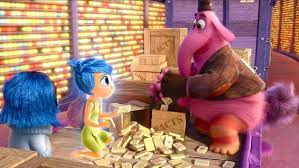
One of the cleverest jokes in any Pixar movie is in Inside Out, a movie where the central characters are emotions felt by a girl called Riley. 


When the characters Joy and Sadness are accidentally cut off from the rest of the emotions, they try to make their way back through Riley’s mind to the central control room. They board the ‘train of thought’ accompanied by a character they meet in Riley’s subconscious – Riley’s semi-forgotten imaginary friend Bing-Bong. On the train Joy knocks over crates containing facts and opinions and remarks that they look very similar. Bing-Bong tells her not to bother sorting them out because no-one can tell them apart. (Here's the scene on YouTube)

That’s incredibly astute. It explains covid-denialists, conspiracists, woo-peddlers and religious fundamentalists. They literally cannot tell an objective, demonstrable fact from an unevidenced opinion. Everything has the same weight – a meme off Facebook, through to a talking head on a chat show, through to a peer-reviewed paper published in a reputable journal. And when we factor in confirmation bias, where we are more likely to listen to sources that corroborate our existing beliefs rather than sources that conflict with our beliefs, we can end up adrift in opinions, thinking they are truths.

But the rocks of reality poke through the surface of the sea.

We see this in the multiple posts on the Herman Cain Awards Reddit, where so many people follow the same track. They post covid-denying memes, antivax propaganda, weird claims about conspiracy, then they get ill. Some continue denying the seriousness of their illness right up until they are posting from their ICU bed in hospital, often struggling to spell words correctly because of hypoxia as their oxygen levels plummet and their brains struggle to function. Then their relatives and friends start posting tributes to them.

Their belief boat has been holed by the rocks of reality. And they drown.

What is unusual about the pandemic, is that this is happening on a much larger scale than usual. Most religious people have experienced unanswered prayers, and have girded themselves with all kinds of reasons why people die instead of being healed, but this usually happens occasionally and can be dealt with as one-offs. It isn’t being chronicled the way these covid-deaths are being shown to be oblivious to the effects of prayer.

I come back to what my dad told me. Sincerity is no protection. Being sincerely wrong about covid can mean trusting in an opinion that isn’t going to protect you from reality.